One harmonized, queryable archive.
Every data type.
DataHealth unifies clinical, biological, imaging, and molecular data in a single structured archive. CDISC-compliant, queryable in natural language, encrypted end-to-end.
Clinical datalives in environmentsthat don't talkto each other.
Each data type lives in a different system, a different format, managed by a different team. Cross-queries are nearly impossible.
Four integrated capabilities.
One platform that archives, standardizes, queries, and shares clinical data across institutions.
Archive
All data types — eCRF, imaging, biosamples, genomics — in a single CDISC-compliant repository. European cloud, self-hosted option, quantum-resistant encryption.
Ingestion
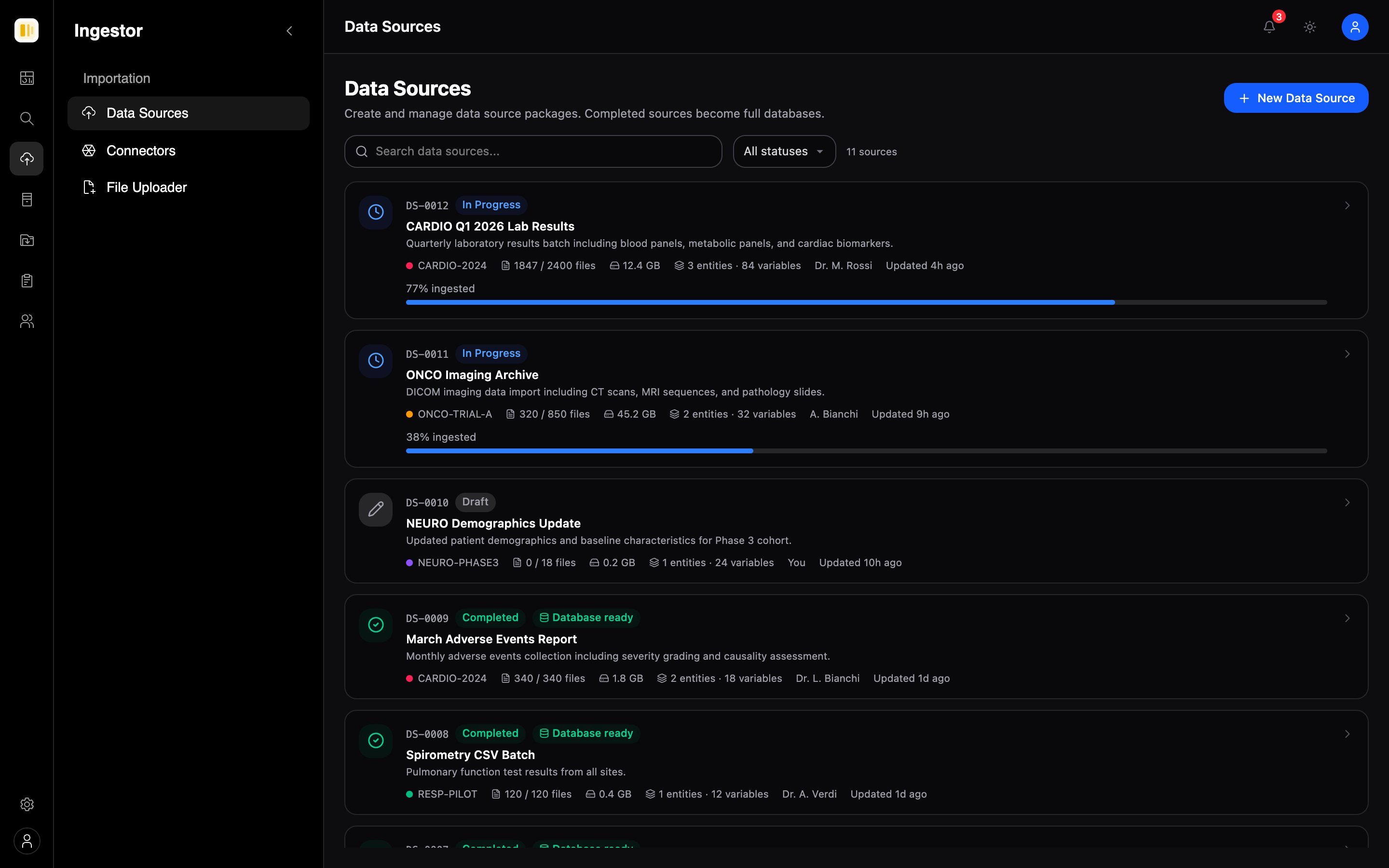
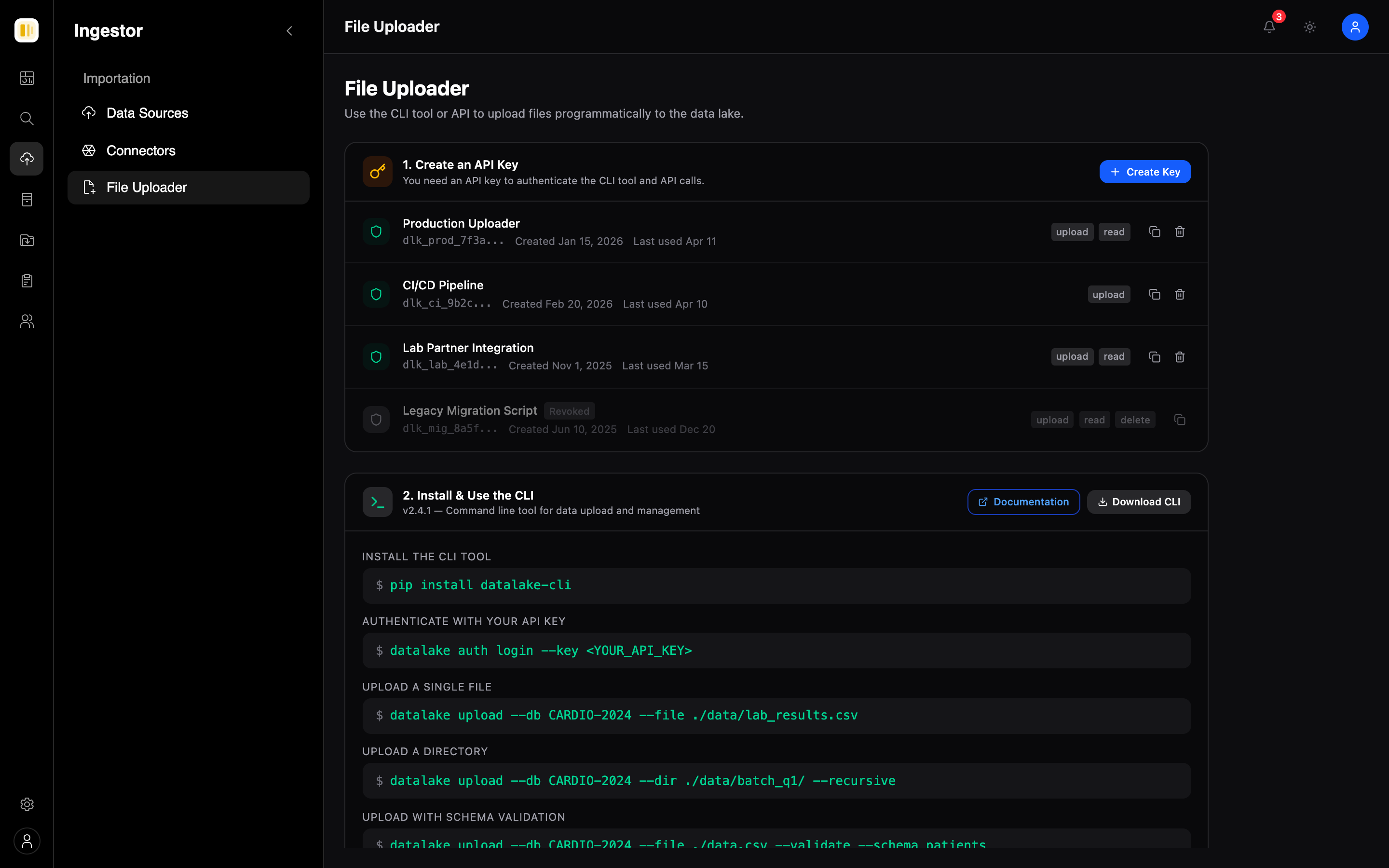
Guided pipelines that validate, standardize and anonymize incoming data. Automatic quality checks and CDISC mapping. CSV, Excel and bulk CLI transfers.
Query
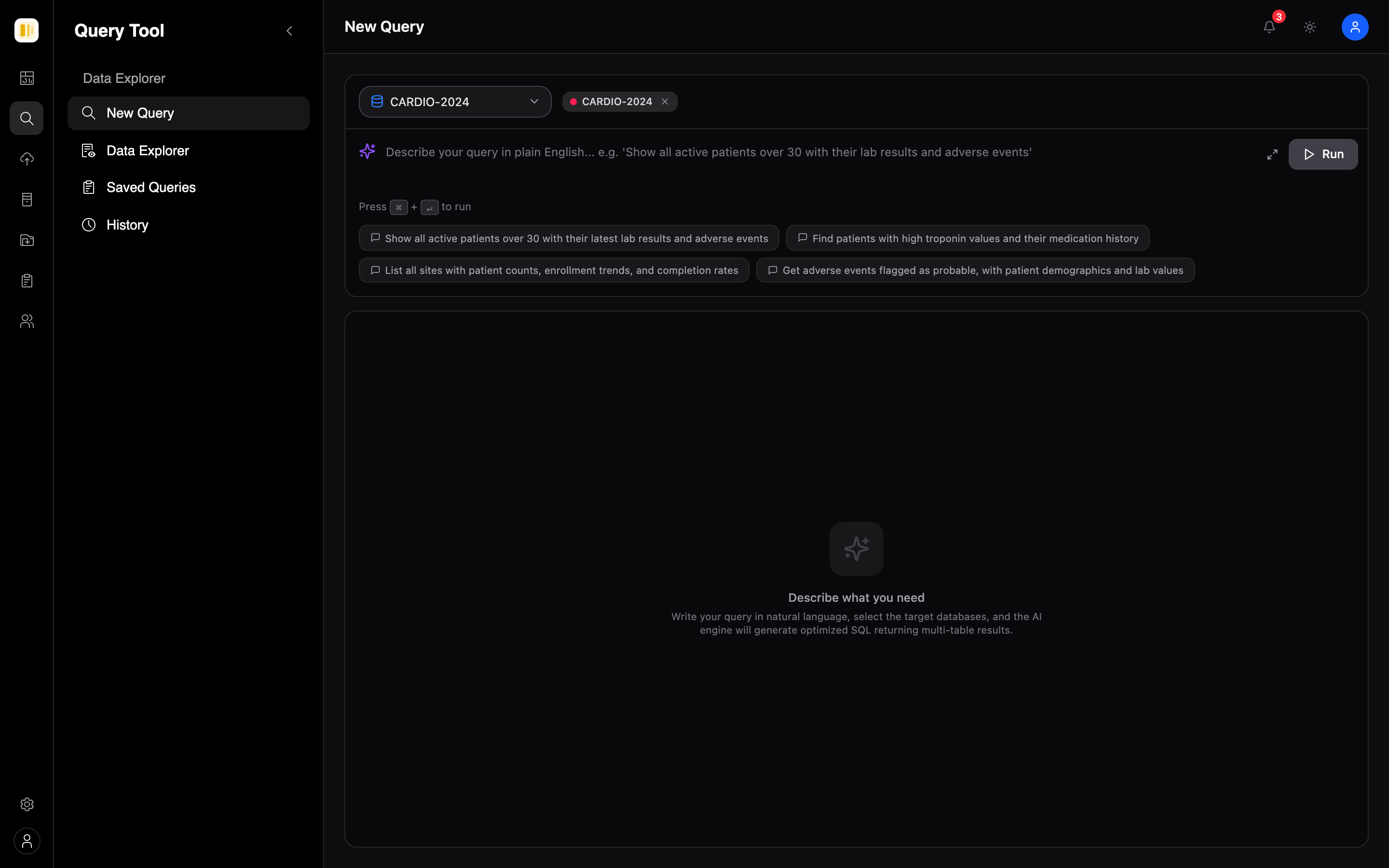
Ask questions in natural language. The MCP server translates them into structured queries with built-in access control. Results exportable as CSV, JSON and dashboards.
Sharing
Controlled sharing with full audit trail. Data owners define access rules. Direct link to the Open Data Consortium with FAIR protocols.
Beyond archival.
The Open Data Consortium
Institutions that archive data on DataHealth can choose to join a shared discovery network. The consortium does not expose raw data. It publishes metadata: disease areas, sample sizes, data types, and the institution that holds them. Researchers worldwide can discover what exists and submit a formal research proposal to the data owner.
Institutions archive
Research institutions deposit post-trial data into DataHealth. All data is structured, anonymized via UUID, and CDISC-compliant.
The consortium indexes
The consortium publishes that certain data exists — not the raw data itself. Researchers can see which disease areas, sample sizes, and data types are available.
Researchers request access
Researchers submit a formal research proposal. The data owner reviews and grants, modifies, or denies access. Full audit trail.
Analysis begins
Approved researchers query the data in natural language. The MCP layer translates questions into structured queries, enforcing access controls throughout.
Who is behind DataHealth.

Fondazione Michelangelo
Italian oncology research foundation. Over 30 years of clinical and genomic data on breast cancer. Founding data partner and scientific advisor.

Diveedi Lab
Software studio. Product architecture, technical leadership, and platform development.
QStep
Data quality and regulatory compliance. Validates DataHealth against pharmaceutical and clinical regulatory standards.

IEO
Istituto Europeo di Oncologia. Partner for digitization of histological slides and biological samples.
DataHealth wins the
Collabora & Innova grant
Our R&D project was selected among the best by Regione Lombardia under the FESR 2021–2027 Regional Programme. A recognition of the innovation we are bringing to clinical data management.

Try DataHealth in action.
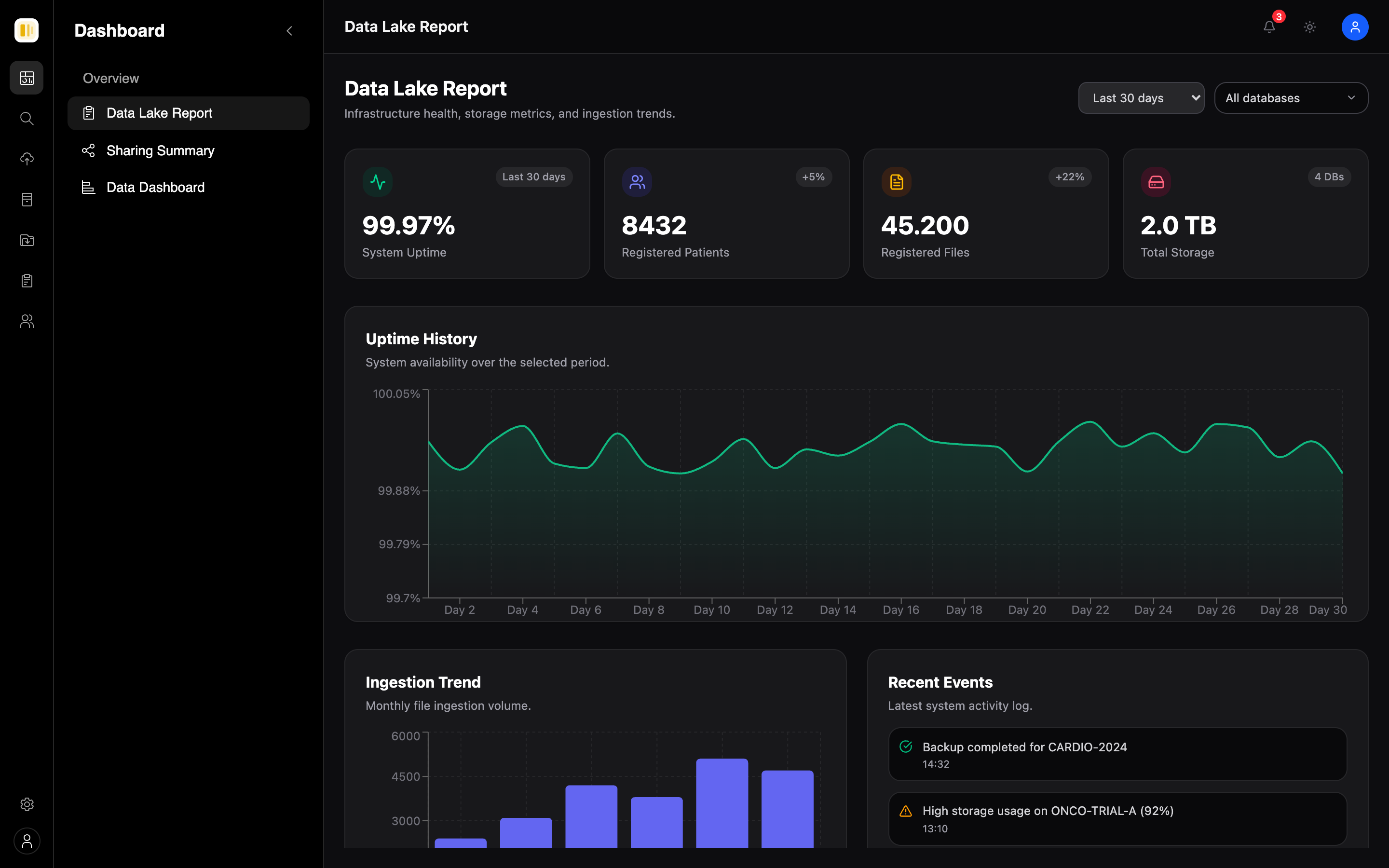
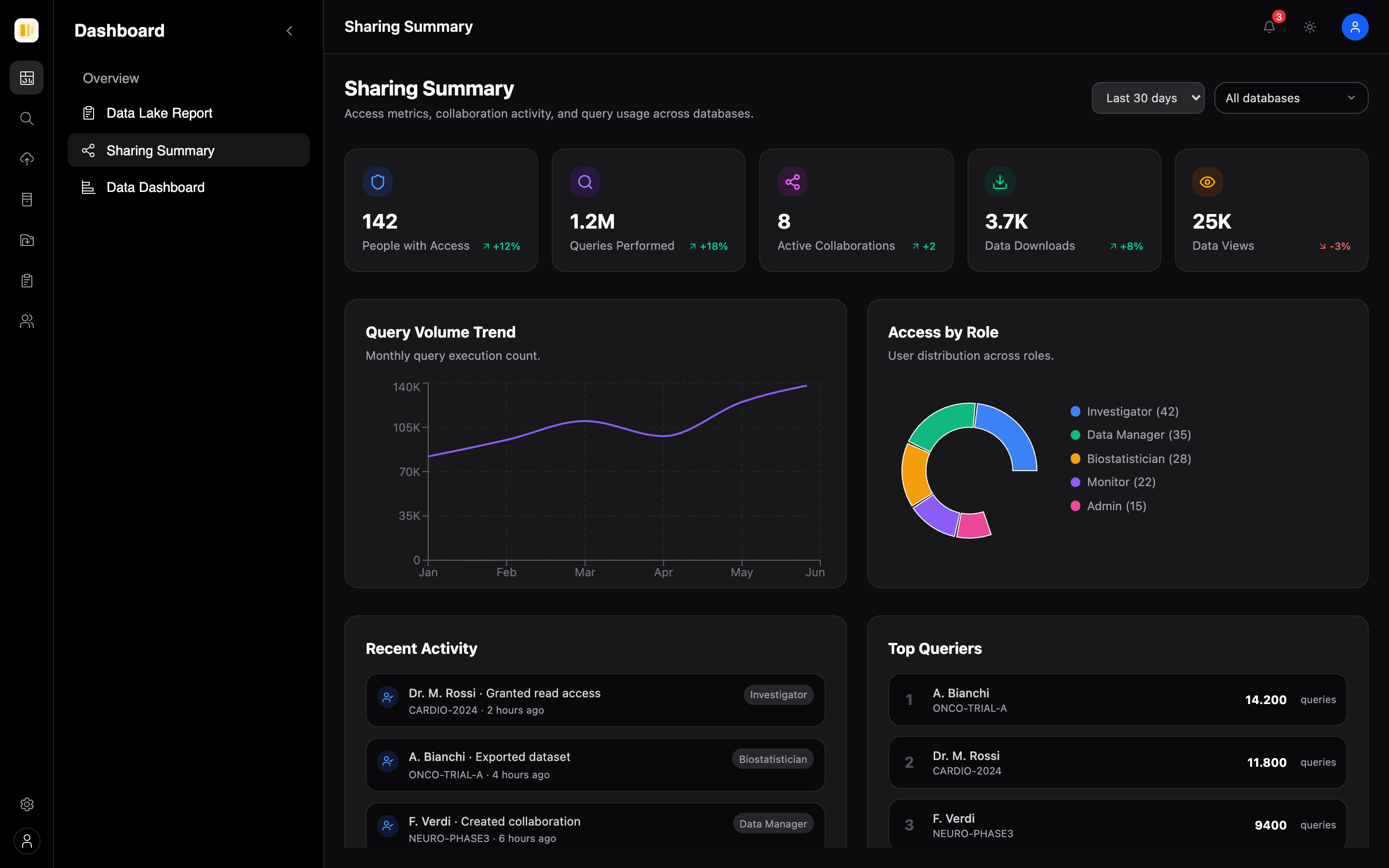
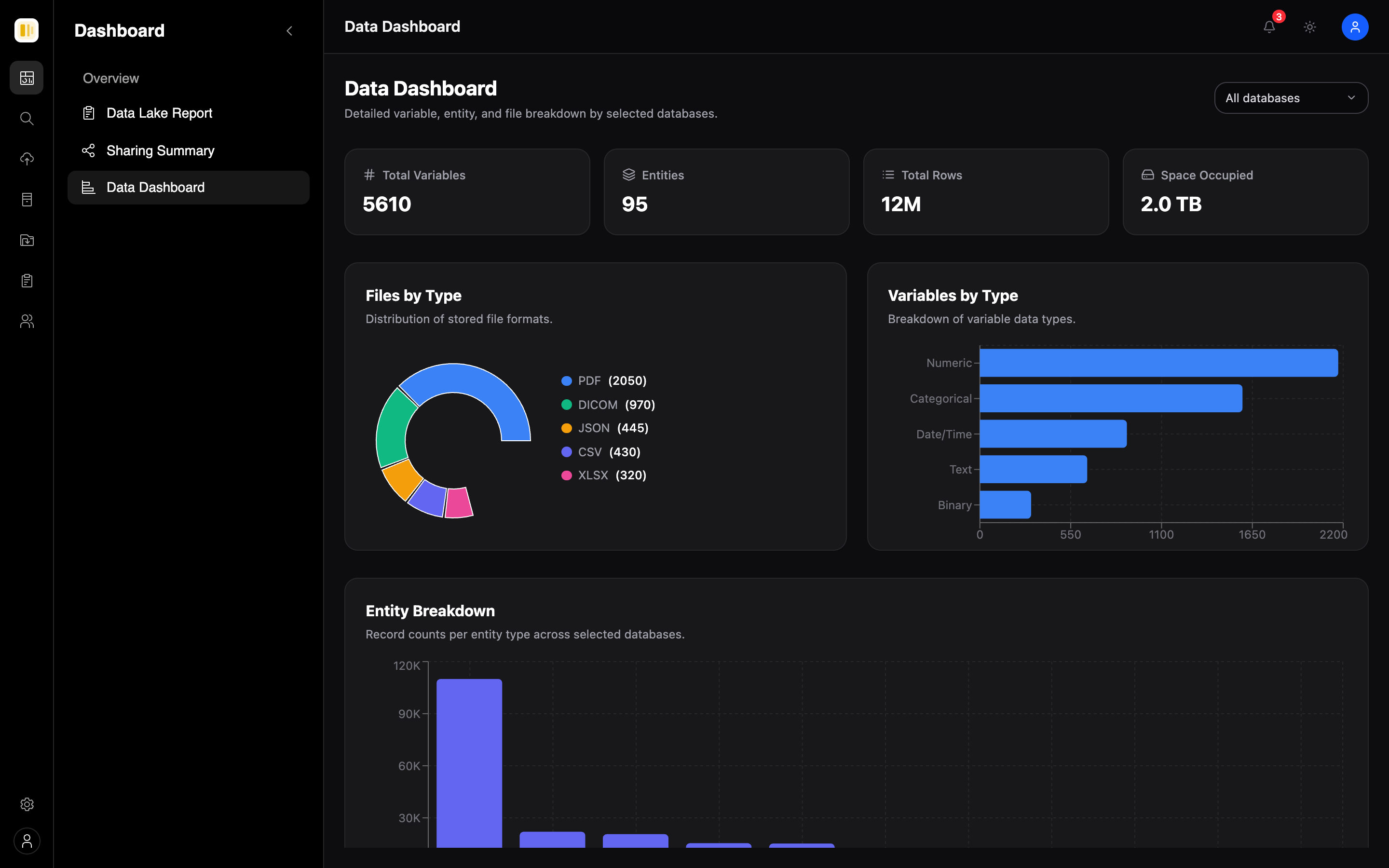
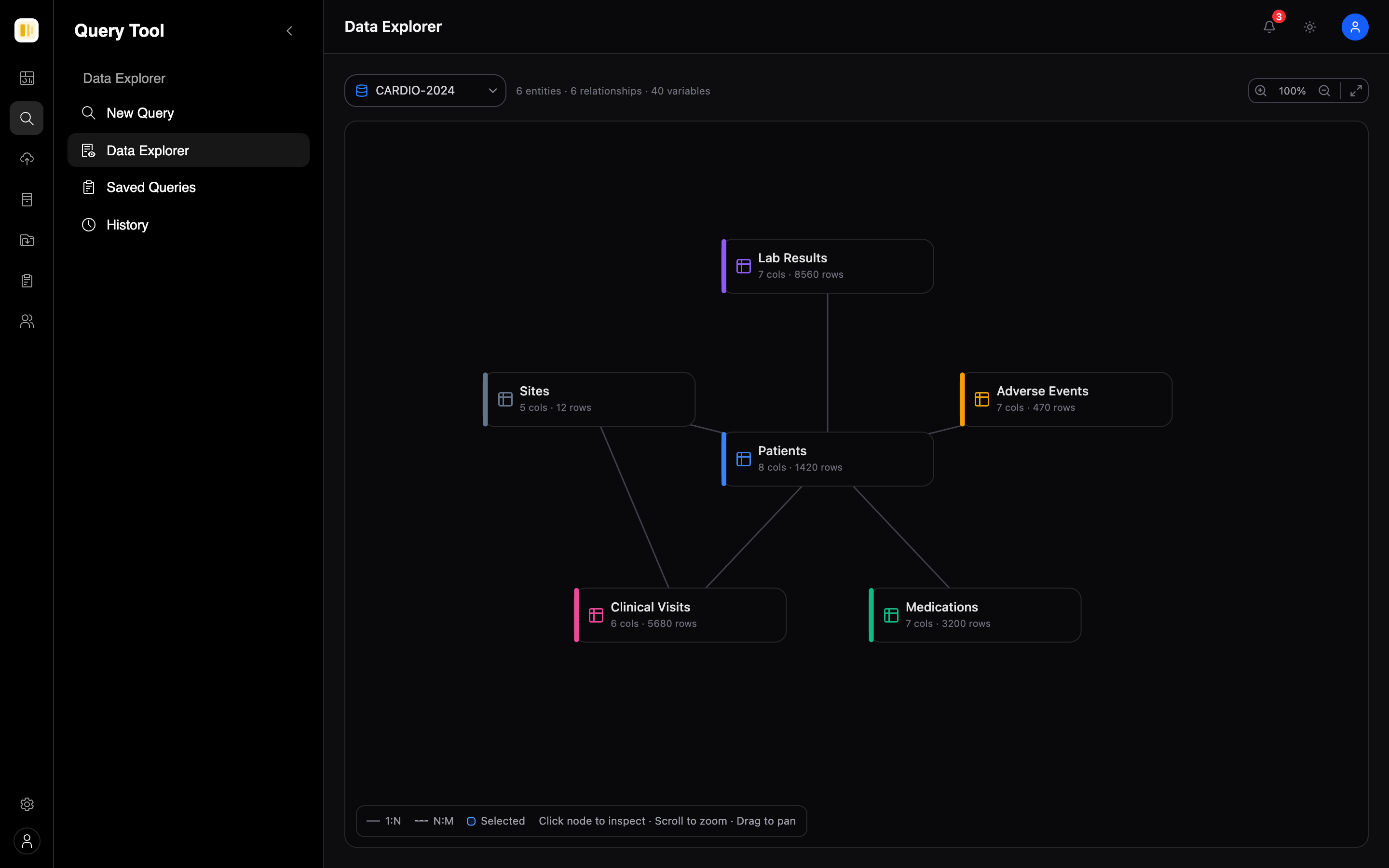
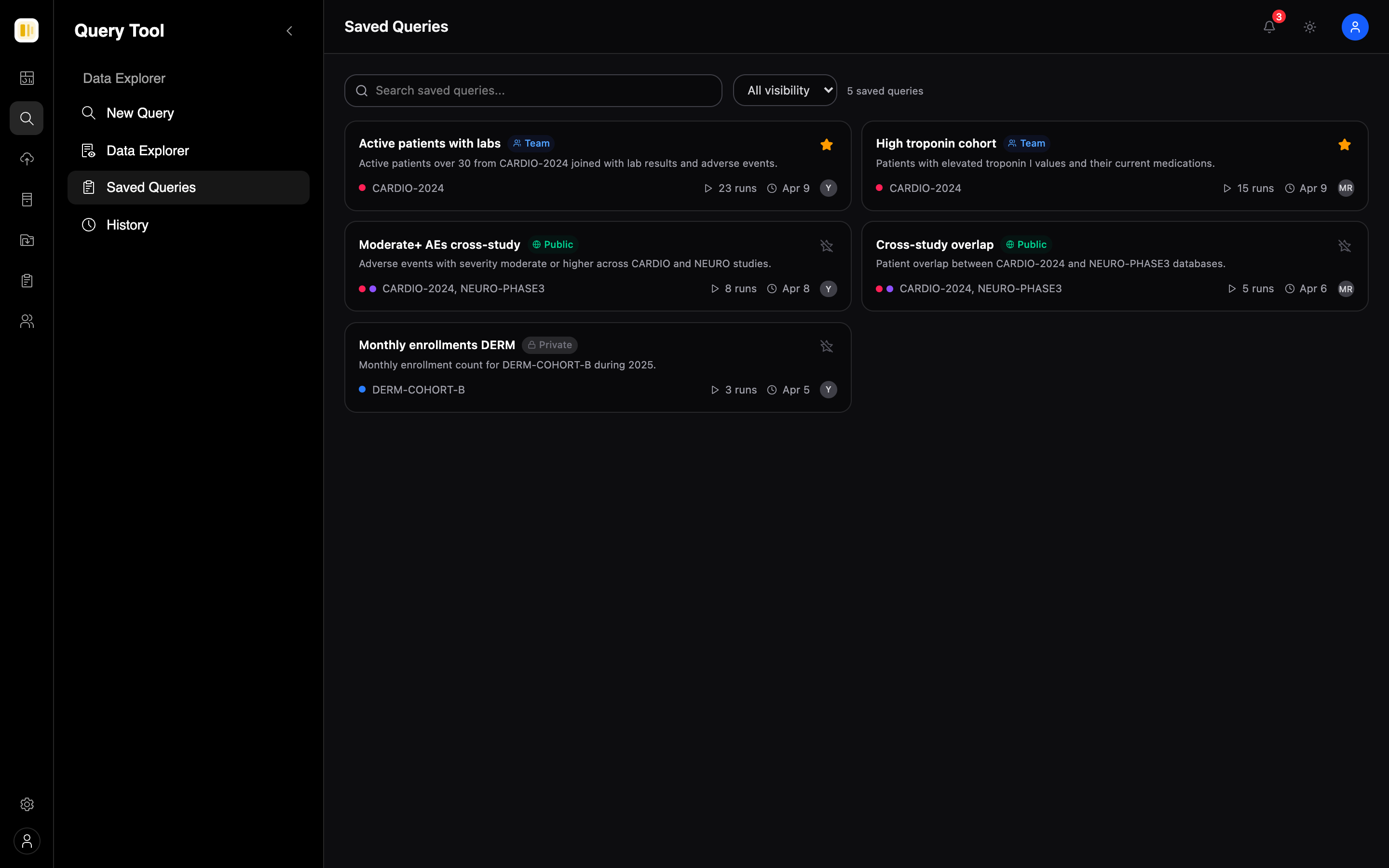
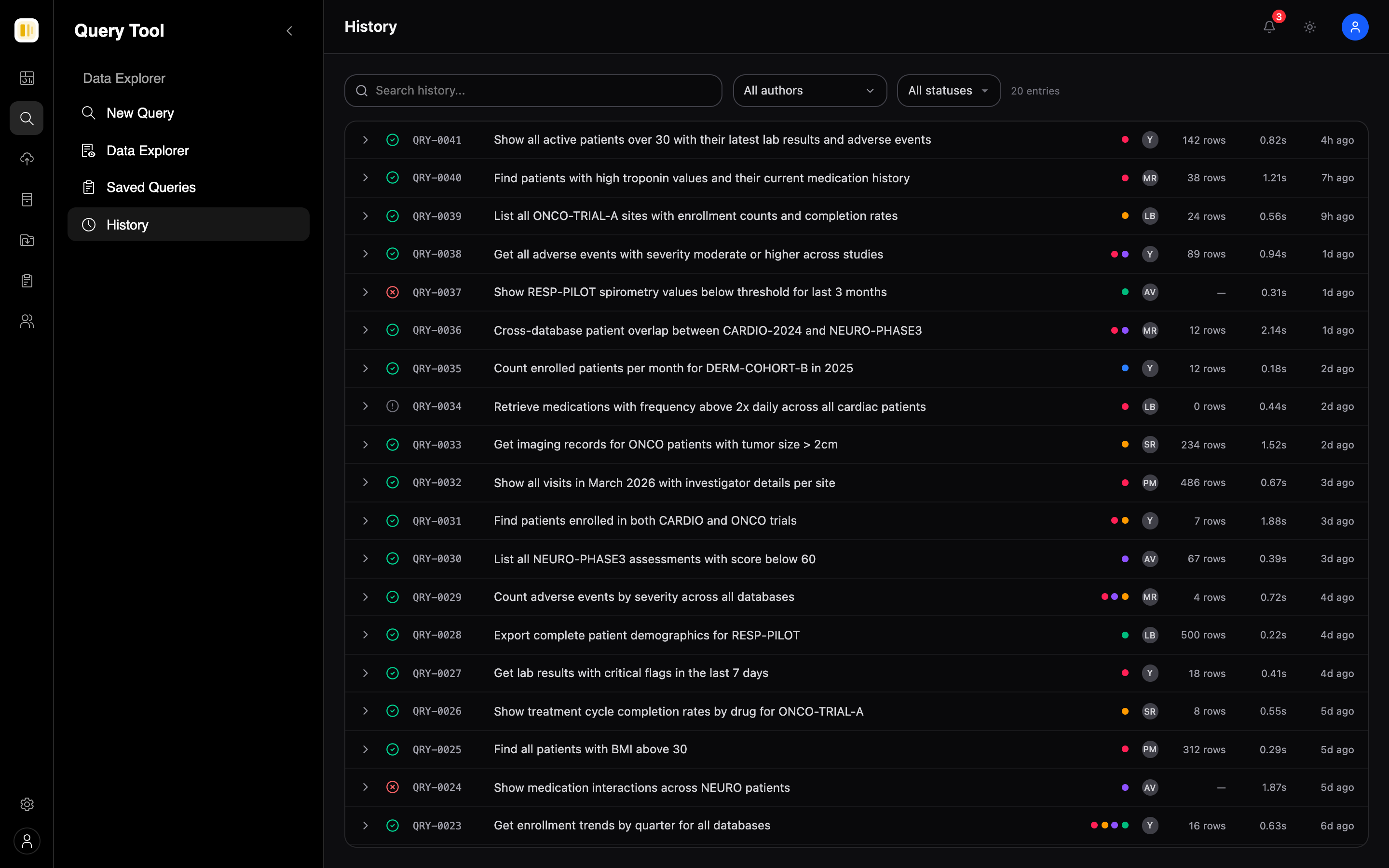
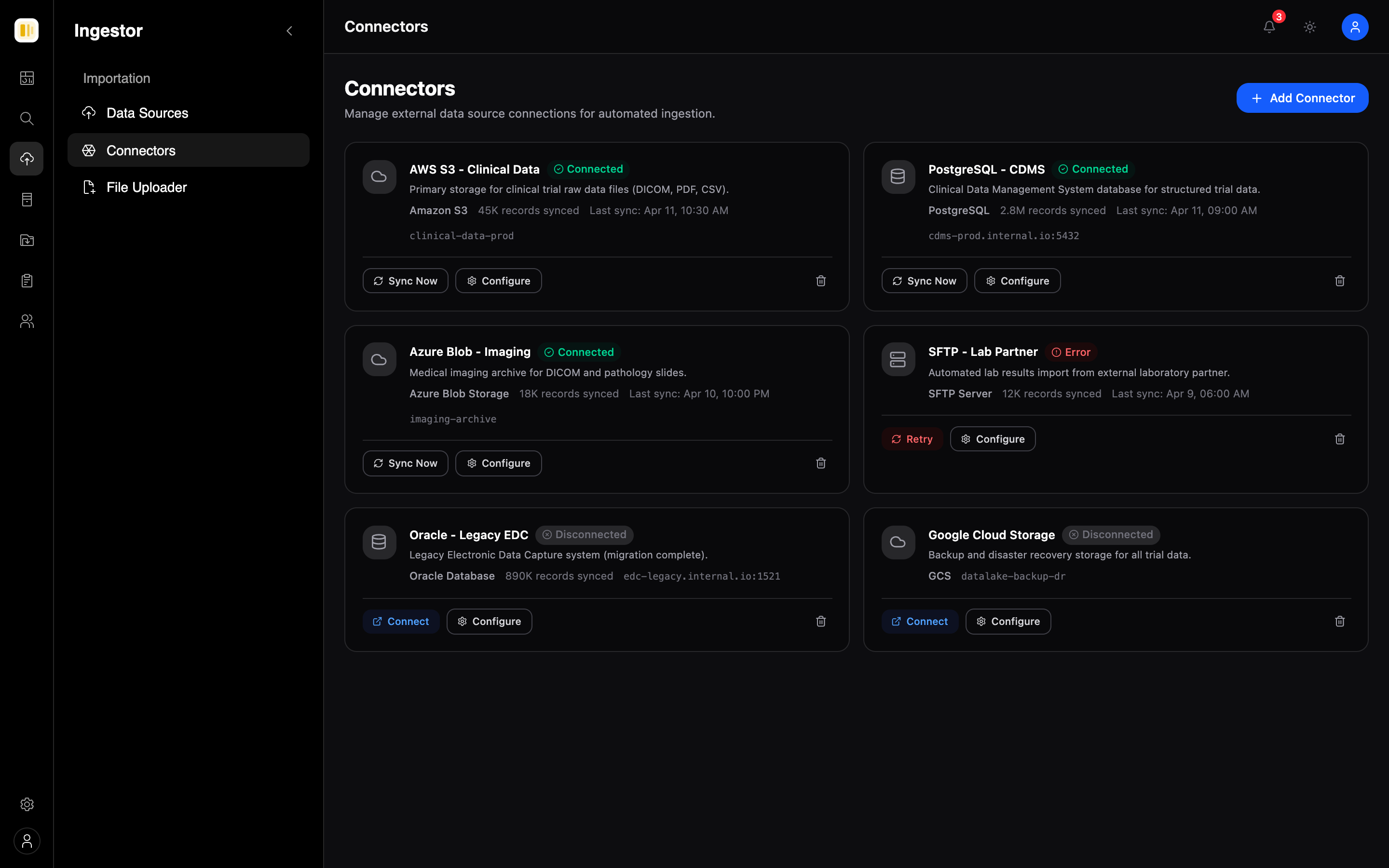
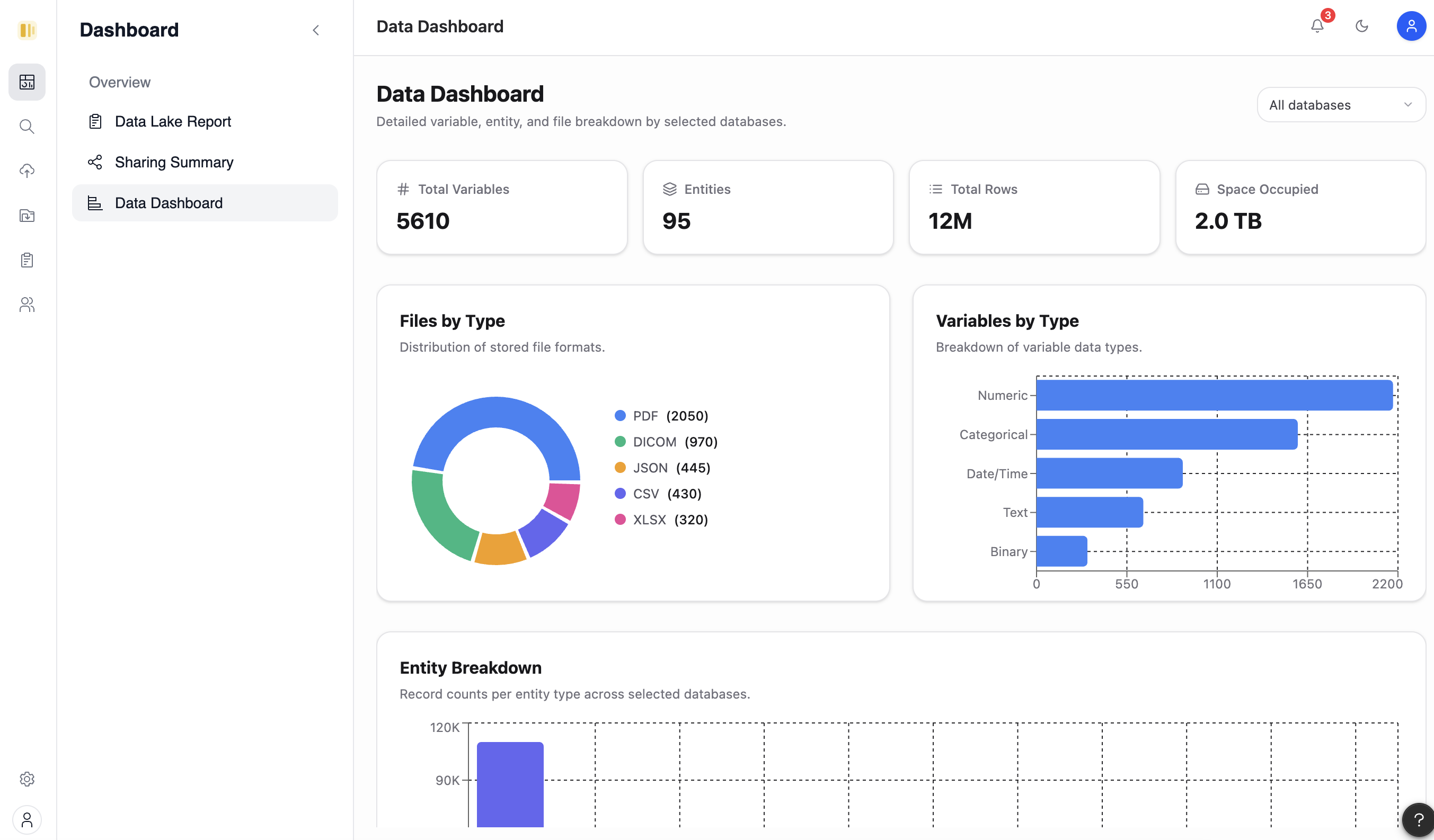
Explore the platform interface. Navigate the archive, run a natural language query, and see how data flows between institutions.
Visit the desktop version of this site to explore the platform interactively.
Interactive demo — navigate freely through dashboard, query tool, data manager and more.
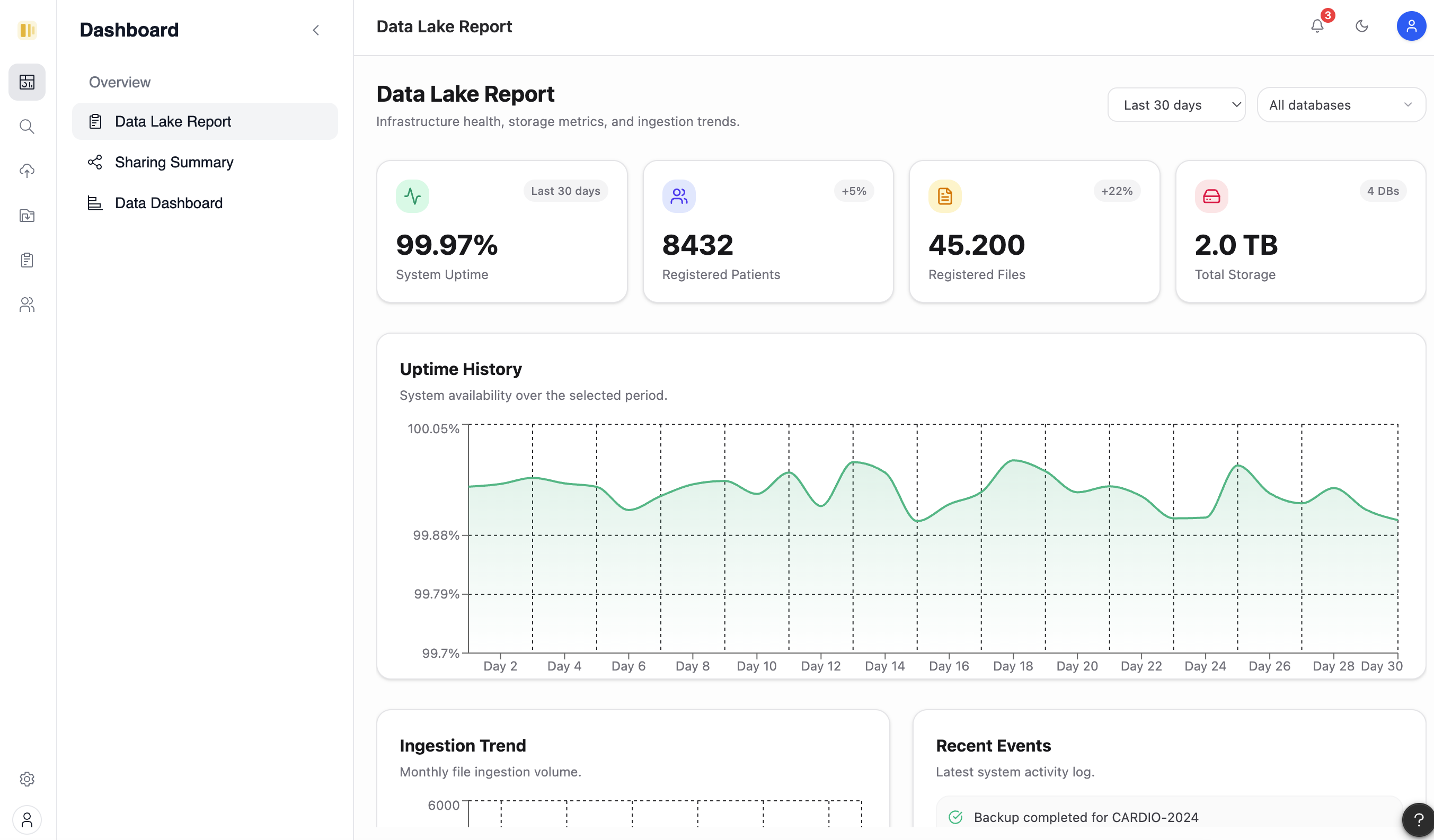
Dashboard
Query Tool
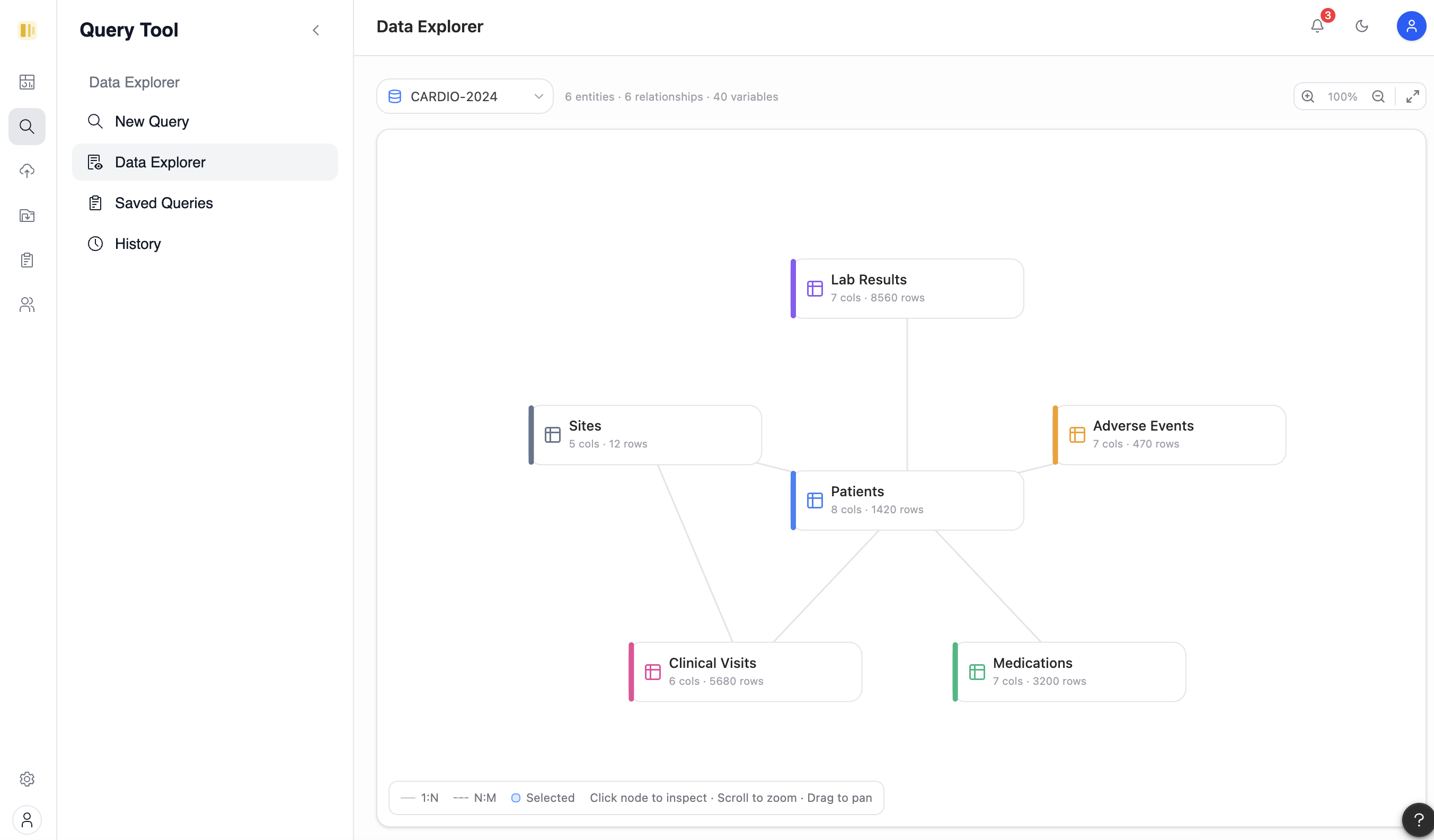
Data Explorer
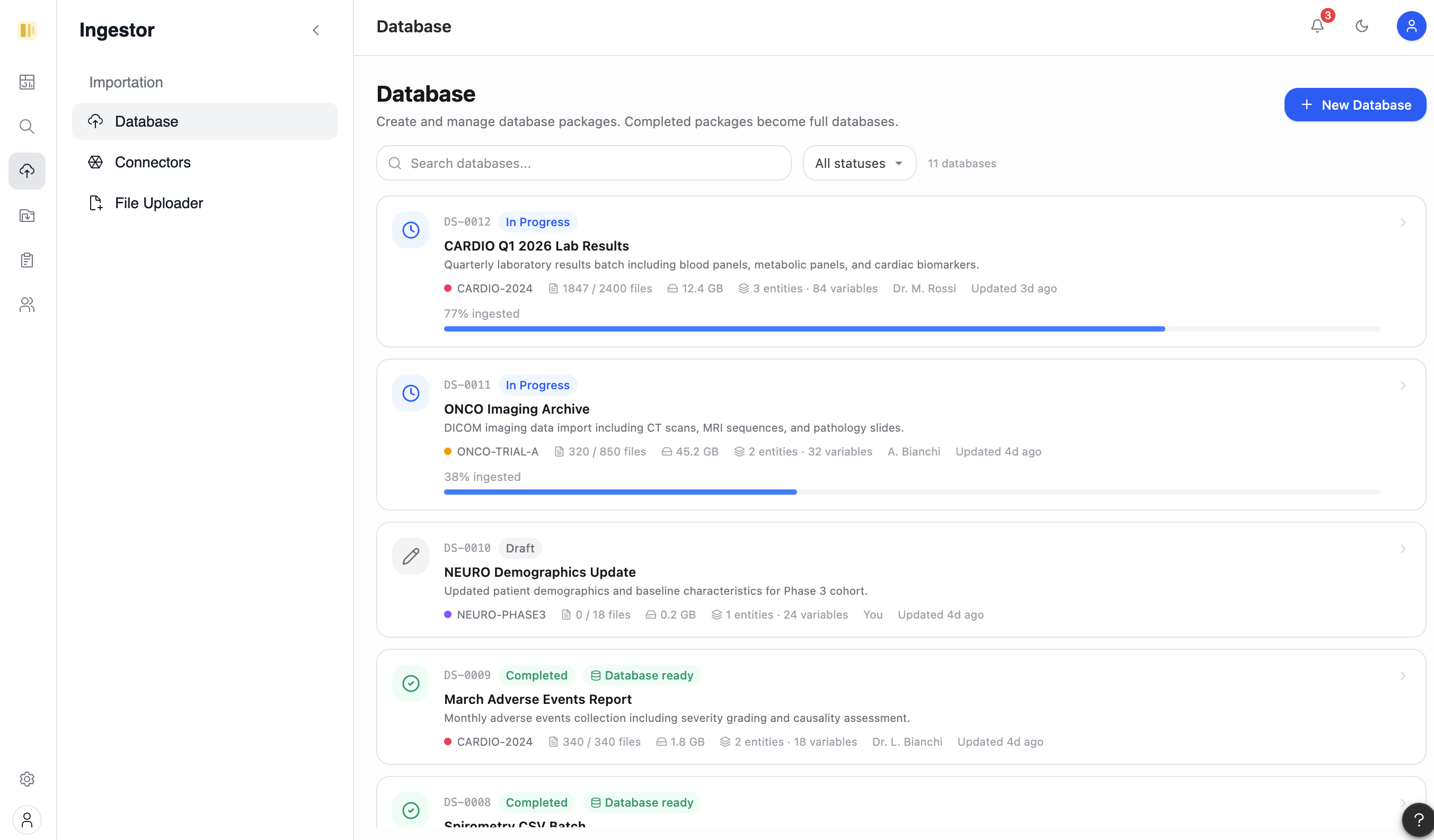
Data Manager
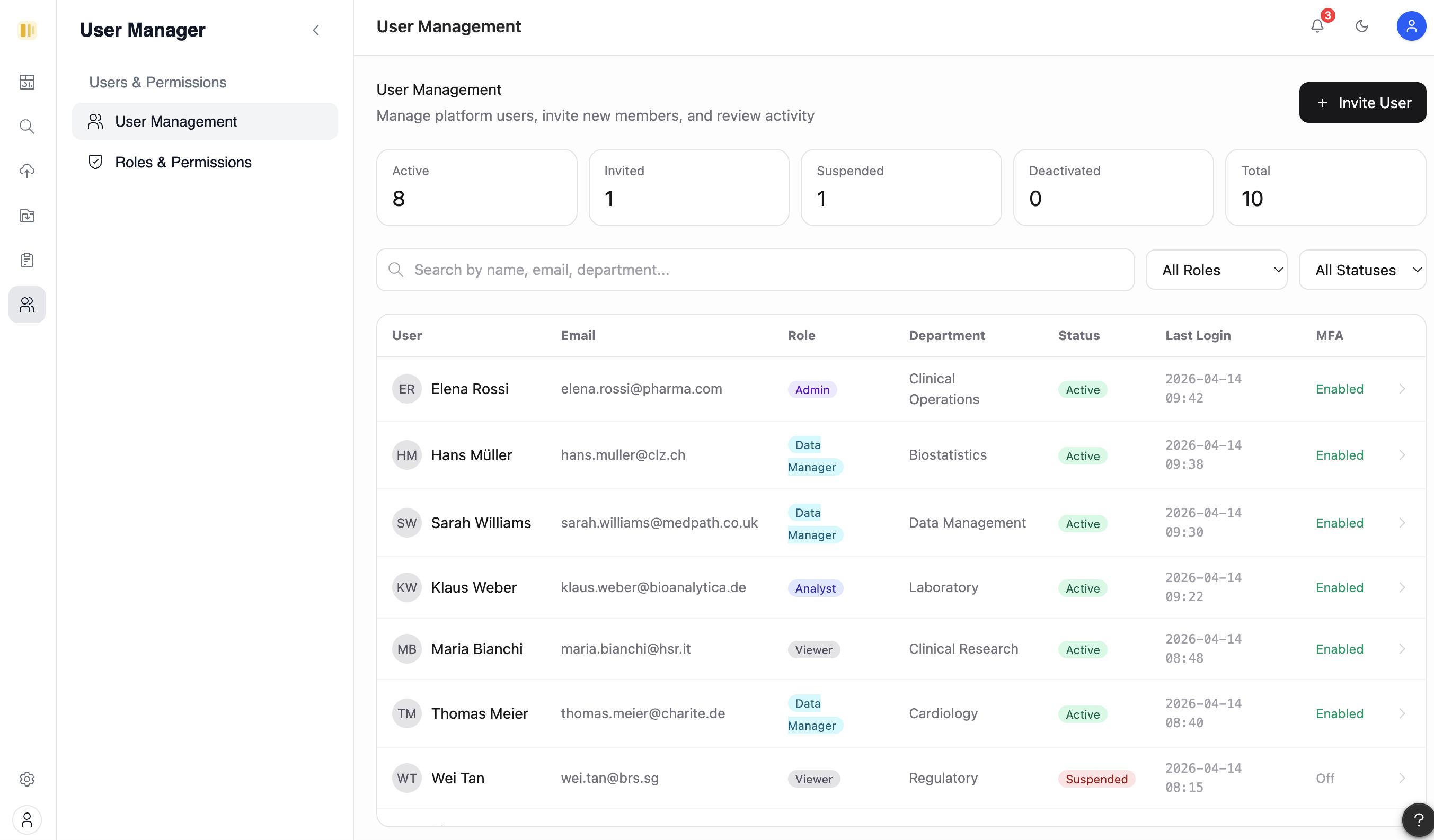
Settings
Frequently asked questions.
All data is encrypted at rest with quantum-resistant algorithms and in transit via TLS 1.3. The platform complies with GDPR and HIPAA. Anonymization is performed via UUID mapping — no raw patient identifiers are stored. Security audits and penetration testing are conducted by independent third parties.
Yes. DataHealth is available as a managed cloud service on European infrastructure, or as a self-hosted deployment under your full control. Both options include the same platform and support.
eCRF exports (SAS XPT, CSV), lab results, biological samples, imaging (DICOM), genomics (FASTQ, VCF), transcriptomics (RNA-seq), and custom data types. All data is mapped to CDISC standards.
It depends on volume and format. For institutional datasets (500 GB–1 TB), the process typically takes 2–4 weeks including validation and quality checks. Managed migration services are included.
Consortium participation is optional. Institutions pay only for their own archival storage. Data discovery and sharing carry no additional cost. There are no per-query fees or per-researcher licenses.
Without DataHealth, 30 years of breast cancer research data would have remained scattered and at risk of loss. Now it is structured, searchable, and available for new research.
Fondazione Michelangelo
The consortium has enabled two cross-institutional studies that would not have been possible without centralized data access.
Interested in DataHealth for your institution?
Fill out the form and we'll get back to you to schedule a platform demo.